Showing posts with label Parenting. Show all posts

Thursday, January 01, 2009

Chores That Toddlers Can Tackle

When I'm in the kitchen expect my 2 1/2 year old toddler to be there around me. He is always fascinated with what I'm doing and wants to try it too. He carries around a stool where he can step on to take a good look at what I'm doing. When I microwave food he likes to push the buttons; when I load clothes in the washer or dishes in the dishwasher he likes to do it too; when I vacuum he wants his turn too; and so on and so forth. I always wonder why he would rather watch me than play with his own toys. He wants to join in the action all the time, he'd say "I do, I do" or "help mommy".

I realized that it is an opportunity for learning so I include him in most of the things I do in the kitchen like putting away the utensils back to the drawer but with supervision of course. He learned how to identify and sort spoons, teaspoons, forks and knives. I let him wipe the kitchen counter to keep him occupied. Then after a while I would see him wiping the floor too and putting the rugs in order when he sees them crooked. Anything that will keep him occupied is good enough distraction, so I can continue with what I'm doing peacefully. And at the same time, I'm teaching him the value of being organized, cleaning up and helping in few basic chores.

Here are some of the chores that toddlers can tackle:
  1. Pick up and put away toys.
  2. Put dirty clothes in the hamper.
  3. Help sort colored and white laundry.
  4. Unload clean clothes from a cooled-down dryer.
  5. Deposit and take mail from mail box.
  6. Dust. Provide a dust cloth or feather duster and give a demonstration, then let your toddler loose. Be sure there are are no breakables in the area to be dusted.
  7. Unpack and put away unbreakable groceries (toilet paper, paper towels, bread, cereal boxes, pasta) in accessible cabinets.
  8. Sweep the floor with a small broom and dustpan (a dustpan that "stands up" and can be held by a long handle makes this task easier).
  9. Set the table with placemats and napkins, unbreakable dishes and cups, and flatware (no knives).
  10. Clear the table of unbreakable item.
  11. Dry unbreakable dishes, pans, spoons, plastic cups.
  12. Wipe watersafe surfaces with spray bottle of water and cloth or a damp sponge.
  13. Wash, scrub, and rinse produce in kitchen sink (standing on a sturdy, steady step stool).
  14. Tear lettuce for salad.
  15. Toss a small salad in a large bowl (until your toddler is proficient, it's probably wise to add the dressing later).
  16. Snap string beans, shell peas, husk corn on the cob, break broccoli or cauliflower into florets.
  17. Cut cookies or sandwiches with a cookie cutter.
  18. Shape meatballs, dumplings, or cookie balls. But make sure to wash thoroughly before and after this chore. And instruct your kids not to taste the mixture if it contains raw meat or raw eggs.
  19. Mix or stirr eggs, pancake batter, cake batter, uncooked pudding. Again no licking allowed if raw egg is an ingredient.
  20. Water plants (Use a small watering can)
  21. Pull weeds (under close supervision)
Source: What to Expect the Toddler Years

==> READ MORE!

Thursday, December 11, 2008

Is Your Child a Leftie or a Rightie?

Sometimes when my son eats he will just hold the spoon with his right hand but not use it, and then picks up the food with his left hand to put in his mouth. He uses most of his left hand when doodling or painting and his right hand when playing. So I'm not sure at this point whether he'll be a leftie or a rightie. I remember as a little child, my playmate who was using her left hand more was encouraged by her mom to use her right hand instead. I didn't realize that this will do the child more harm than good. Though right hand is the right hand for a majority of the population, it is the wrong one for 5% to 10% destined to be a leftie.

Parents should trust nature and time to reveal the handedness of their children and not encourage them to use either hand while still very young.

Here are the reasons why:
  1. The hand a child favors is genetically determined. When both parents are lefties, there's more than 50% chance their children will also be left-handed. When just one parent is left-handed, the chance of a left-handed child drops to about 17%. When neither parent is left-handed, it's down to 2%. Since it's nature, not nurture, at work here, encouraging your toddler to use his right hand won't help and could hurt.
  2. Handedness is not usually apparent until at least the age of 3, and some kids keep parents guessing for several years beyond that birthday. During these early years, it's common for children to appear ambidextrous, freely switching back and forth between hands until they decide which is the more facile. About 20% of children never settle exclusively on one hand or the other, but remain to some degree ambidextrous. Some ambidextrous children use both hands equally well and can employ either for almost any task: other switch off for for specific tasks - for example using the right hand for eating and the left hand for throwing.
  3. Research suggests that when parents try to "force" a child into using the hand he's not genetically programmed to use, handwriting and other problems can result. Consider, after all, how tough it is for you to try to write with the "wrong hand" just for fun; imagine how tough it would be if your were required to use that hand all the time.
There is no foolproof that will predict the handedness of your child, but parents can see some clues already even in young toddlers. Some clues will be the hand that a child uses to draw or throw a ball are better predictors of handedness than the hand he uses to hold a spoon.

Source: What to Expect the Toddler Years

==> READ MORE!

Saturday, November 29, 2008

What Toy Is Right For Your Child?

There are so many toys in the market today, especially now that Christmas is almost in our midst. When I go to a toy store I always have something in mind to buy for my son, usually interactive and educational toys. But when I get there, the choices are just too overwhelming. Here are some tips on what toys to look for and what kids can learn from the toys. Depending on the age of your child and the things that they can learn from a particular toy, here are some tips and guidelines you can follow in choosing a toy.

  • IT'S ALL ABOUT DISCOVERY (Birth to 1 1/2):
  1. Mobile, mirrors, soft books - kids can learn tracking object
  2. Rattles and other toys that make sound - kids can learn connecting noises to objects
  3. Stacking toys - kids can learn hand-eye coordination
  4. Pull and push toys, activity tables - kids can learn how to crawl, walk, stand

  • IT'S ALL ABOUT ACTION (1 1/2 TO 3):
  1. Ride-ons, soft balls - for gross motor skills (bigger movements like running and throwing)
  2. Clay, blocks, crayons - for fine motor skills (smaller movements like squeezing)
  3. Play kitchen and tools, puppets - kids can learn pretend play and role-playing

  • IT'S ALL ABOUT TEAMWORK (3 TO 5):
  1. Puzzles, board games, athletic toys - kids can learn social play, sharing (maybe grudgingly, but that's okay)
  2. Dress-up clothes and props, paint kits - Make believe and imaginative throught
  3. Instruments, building sets - Fine motor control, dexterity
  4. Sand or water toys - for different physical properties (shapes, texture, volume)

  • IT'S ALL ABOUT CURIOSITY (5 TO 8):
  1. Trivia, science and math kits - for improving concentration and memory
  2. Computer games, learning software - for strategic thinking
  3. Bikes, skate, scooters, jump ropes - for honing gross motor skills
  4. Musical instruments, arts and crafts - for creative problem-solving

  • IT'S ALL ABOUT INDEPENDENCE (8 TO 12):
  1. Hobby kits - for developing talents and interests
  2. Karaoke, trading cards - for socialization
  3. Knowledge-or strategy-driven board games - for playing competitively and fairly

==> READ MORE!

Monday, November 10, 2008

Keep Your Child Healthy All Season Long

When one in our family gets sick, for sure the other two will follow. We're just living the traditional quotation that 'a family that prays together stays together' only for us it's 'the family that stays together gets sick together', lol. Kidding aside, it is really hard when one member of the family is sick most especially if it's our young children. I would rather get sick myself than see my little toddler not feeling well. But since germs is lurking around, all we can do as parents is to outsmart cold and flu bugs.

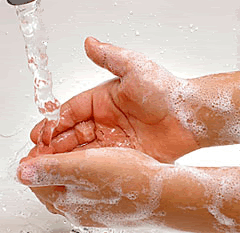
Hand washing is the number one way to fight the germs but here are more tips on how to keep the germs at bay:
  • Make bubbles - Teach kids to scrub hard enough to whip up some suds. It's the friction that really matters.
  • Sanitize smartly - I keep hand sanitizer in the diaper bag, my purse, the car, the bathrooms and my son's bedroom. You can never have enough of sanitizer but choose the ones with at least 60% alcohol to kill bugs.
  • Spot-clean - Don't look for the dirt but rather the germs. It is important to pay attention to the high-traffic areas where germs linger, like countertops, phones, and door knobs. My daily routine in the kitchen includes wiping the cupboards' handles and door knobs with disinfectant household wipes to kill the germs that accumulated during the day.
  • Wipe on - Use each wipe on only one surface, then toss it.

==> READ MORE!

Wednesday, November 05, 2008

To Peel or Not to Peel

My son loves eating most fruits and I'm glad. He likes eating bananas, cantaloupes, honey dew, grapes, oranges, apples and more. I've seen people peeling the grapes before giving them to their kids, I don't. I usually give grapes and apples without peeling them. But which fruits and vegetables can be eaten with their peel on?

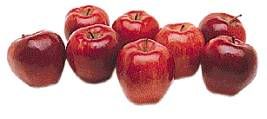
  • APPLE - Don't peel. An apple with its peel provides almost twice as much fiber, 50% more vitamin A, and 25% more potassium as one without it. Just wash the apple first.
  • CUCUMBER - Peel. Most of the cucumber's fiber comes from the seeds, and you won't lose too much potassium, either. That hard-to-wash-off waxy coating is there mainly to slow down ripening.
  • CARROT - Peel. The texture of unpeeled carrots can be a turnoff, and peeling wn't cost you much potassium, vitamin A, or fiber.
  • PEACH - Don't peel. The flesh and the skin are packed with vitamins A and C, potassium, and fiber. If the fuzz is adeal breaker, try nectarines, which have the same nutrients and fiber.

==> READ MORE!

Tuesday, November 04, 2008

Get Moving Tricks

Sometimes getting ready to go out of the house is a struggle when you have an unpredictable toddler. Like when we're running late already for an appointment and my son won't cooperate to have his shoes on or his jacket on, it's really frustrating. Here are some tips or tricks to get your child moving.

If your child is :
  • CRANKY try:
  1. Taking a deep breath yourself. The more frustrated you are, the crankier he'll be.
  2. Singing a silly song while you put on his clothes.
  • ANTSY try:
  1. Making a game out of getting ready. Create a chart with morning tasks down the side and days across the top. Add a sticker as he finishes each chore.
  2. Challenging him to a race. Set a kitchen timer and see if he can get dressed and washed up before the buzzer goes off.
  • SLUGGISH try:
  1. Giving him a small glass of 100% juice. His blood sugar is probably low after a night of sleep.
  2. Putting on some upbeat music and dancing your way through morning chores.

==> READ MORE!

Sunday, November 02, 2008

Is Your Child Getting Enough Sleep?

When my son was less than two years old, he used to take two naps of two hours each during the day. And when he turned two he just takes an afternoon nap for at least two hours. I always make it a point that he never misses a nap otherwise he will get restless at night. And also because sleep helps in a child's growth, I am really strict about nap schedule. But of course there are days when my son will miss his nap especially when I have to take him to my appointments or errands, but I will just make sure he won't miss it two days in a row.

If you are worried that your child is not getting enough sleep, sometimes it may not be a big deal. Some kids are simply natural short sleepers and it doesn't have a negative effect on their health or growth. But just be on the lookout for these signs of sleep deprivation - crankiness, aggressiveness, hyperactivity, difficulty paying attention, a reluctance to wake up in the morning, a tendency to fall asleep during daily activities, or a habit of sleeping two to three extra hours on weekends. If you see any of these symptoms on your child, you should help him get more sleep by limiting caffeine and exercise a few hours before bedtime, keeping TV and computer out of the bedroom, and sticking to a regular sleep and wake routine.


How much sleep most kids need:
  • Birth to 2 months -- 10 1/2 to 18 hours
  • 2 to 12 months -- 14 to 15 hours
  • 1 to 3 years -- 12 to 14 hours
  • 3 to 5 years -- 11 to 13 hours
  • 5 to 12 years -- 10 to 11 hours

==> READ MORE!

Saturday, November 01, 2008

Making Spelling Fun

I was watching Akeelah and the Bee the other night, and I was amazed at how young brains can memorize and master huge numbers of words, much less go through the high intensity of spelling bee contest. I know it can be challenging to teach our kids how to spell and retain words, but it's always good to start them young. Practicing weekly word lists can get dull fast. Here are some tips on how to help your child to master the words.
  • Tell him to eat his words. Let him spell them out with macaroni, chocolate, or Goldfish crackers and then eat them. If it's not snack time yet, then you can give him straws, pennies, or paper clips to use instead.
  • Draw word rainbows. Write the word in pencil, then trace over it with different-color markers, water paints, pencils, or crayons.
  • Practice somewhere new. Use magnetic letters on the fridge, or scribble words with chalk in the driveway or shaving cream in the shower or tub.

==> READ MORE!